The Kickin' Begins
Oh! How I wish the Trionda to swing high across the sky before it speeds into the goalpost in on hell of a match between Messi and CR7! That's one sight I really wanna witness this time in this FIFA World Cup 2026. After Argentina lifted the golden globe shaped cup last time after defeating France, here we are once again to behold the underling tension, thrill and sportsmanship of the star footballers who are to grace the football stadiums across the 3 host nations of the two American continents.
I am not that much of a football fanatic which I'm ashamed to admit since I especially hail from the most football connoisseur abound part of the Indian subcontinent. But, let's keep that discussion aside, since after just a few hours we are gonna witness the opening ceremony of the grand tournament this year followed by the first match between one of the host nation, Mexico and South Africa! I really can't withstand the thrill and I'm all set to go deep into the extravaganza. I'm definitely sure that this edition of the FIFA World Cup 2026, starring the 104 matches, 3 host nations and 48 countries spanning across 39 days will most likely be one of best.
Normally, I support either Brazil or Germany in each edition of the FIFA WCs, but this time I am going to make the bet on Brazil. After all, its the only country to bag 5 trophies by winning the title 5 times! I know some may hate me vehemently for this but, I am not that much of a big fan of Lionel Messi and even though many claim him to be the god of football and the best soccer player of all time, I prefer to stick to my personal views regardless of what the world says. The eight Ballon d'Or awards holder is no doubt an A-class player but let's see if he can fetch his country another one this time like the last. I, however am a good fan of Cristiano Ronaldo. Not because of his style, but because of his discipline. The five Ballon d'Or awards and four European Golden Shoes winner had personally admitted that his fitness regimen is a highly scientific, meticulously structured system based on absolute lifestyle control, high-intensity functional training, and aggressive recovery protocols. His ability to maintain a elite physical condition well into his 40s is the result of extreme discipline across four main pillars. He no doubt might be less talented than Messi, but what makes him stand apart are his life struggles and his mindset of never putting himself down and always seeing himself as the absolute GOAT.
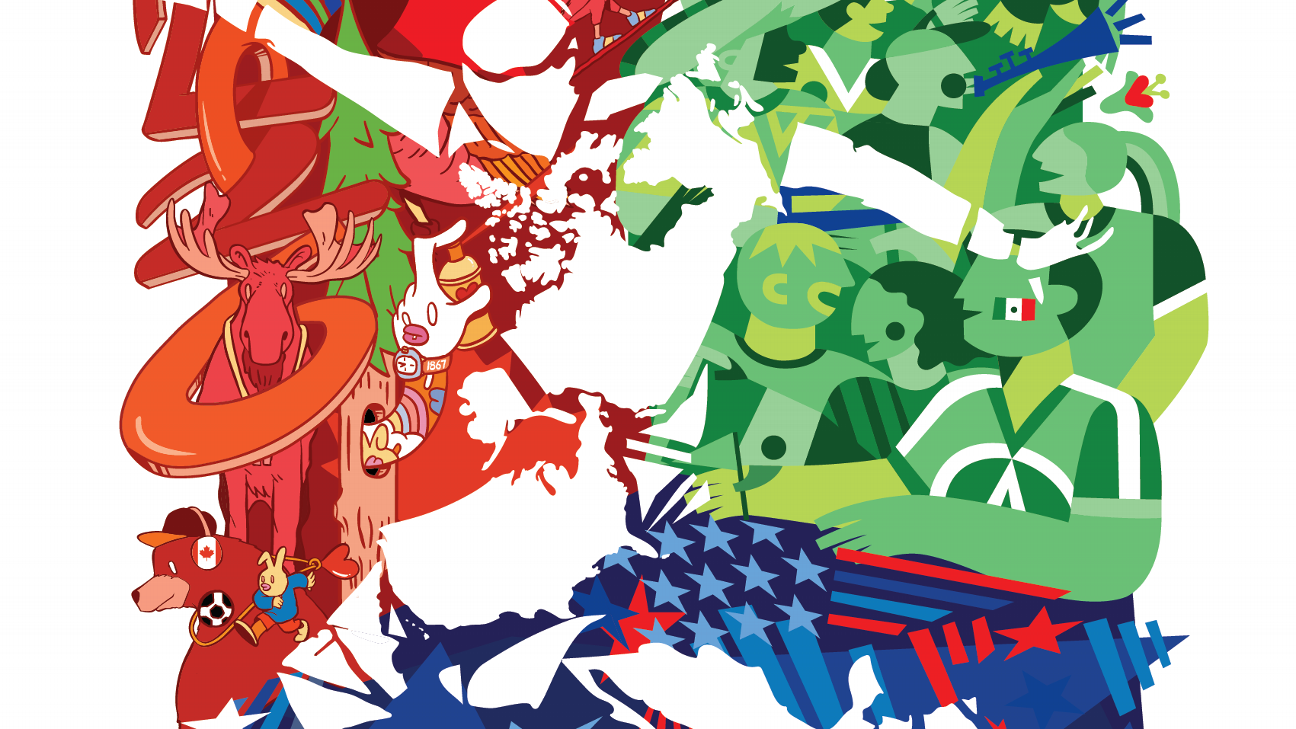
Keeping the personal rivalries aside, let's talk about the technicalities of the game this year. Let's start from the opening ceremonies. The 2026 FIFA World Cup is breaking tradition by launching with a spectacular "trilogy" of opening ceremonies across its three host nations, each taking place 90 minutes before their respective country's first match. The grand festivities kick off on June 11 at the historic Estadio Azteca in Mexico City. This initial ceremony showcases Latin American culture through traditional papel picado paper art and is headlined by global icon Shakira and Afrobeat star Burna Boy, who will debut the official tournament anthem "Dai Dai". They are supported by a heavy-hitting regional lineup including J Balvin, Tyla, and legendary Mexican rock band Maná.
The celebration continues the following day, June 12, with back-to-back ceremonies in Canada and the United States. Toronto’s BMO Field will embrace a multicultural "mosaic" theme, featuring top Canadian talent such as Michael Bublé, Alanis Morissette, and Alessia Cara, alongside global performers like Nora Fatehi. Hours later, the final leg of the opening trilogy lands at SoFi Stadium in Los Angeles. It promises a star-studded, Hollywood-style production headlined by Katy Perry and rapper Future. This massive multi-city rollout sets the tone for a truly unified global tournament before the host nations officially hit the pitch.
Now, let's have a look at the teams which can make eyes open wide by their captivating performances. I will be giving opinions only on some of the handpicked teams this world cup. So, bear with me...
Paraguay enters the tournament as a ferocious defensive unit built on old-school grit and lightning-fast transitional pace, led by the dynamic Julio Enciso, Miguel Almirón, Antonio Sanabria, Gustavo Gómez, and Omar Alderete. Their greatest strengths lie in an unbreakable aerial dominance and high-intensity pressing, though they severely lack consistent creative orchestrators in the middle of the pitch to dictate games. Renowned as South America's ultimate giant-killers when playing a low defensive block, they possess an incredible knack for frustrating elite opponents. This supreme physical conditioning and willingness to suffer without the ball will help them absorb pressure perfectly in the sweltering summer heat of venues like Monterrey or Houston.
Ecuador arrives as an explosive, youth-fueled powerhouse combining elite European tactical discipline with immense South American raw athleticism, powered by Moisés Caicedo, Piero Hincapié, Enner Valencia, Kendry Páez, Pervis Estupiñán, and Willian Pacho. The squad boasts world-class midfield recovery and dynamic wing play, but they historically struggle with clinical finishing when the veteran Valencia is isolated upfront. They possess one of the youngest, most valuable defensive spines in the entire tournament, making them a nightmare to break down. While they are perfectly suited to thrive in the high-altitude Mexican venues, the extreme cross-continent travel required by this tournament could trigger late-stage muscle fatigue.
Japan is a hyper-disciplined, high-octane machine capable of slicing open the world's absolute best with lightning-fast, one-touch passing, orchestrated by Kaoru Mitoma, Takefusa Kubo, Wataru Endo, Takumi Minamino, Ko Itakura, and Ayase Ueda. Their biggest weapons are an unmatched tactical adaptability and elite wing isolation, though they remain structurally vulnerable against highly physical, direct long-ball teams. They have earned a global reputation for orchestrating stunning second-half tactical shifts that completely dismantle elite traditional giants. Their relentless, high-pressing style will thrive in the cooler, indoor US stadiums, but it could backfire drastically if they are forced to deploy it in humid Mexican venues.
Brazil presents a thrilling blend of generational teenage brilliance and elite European club experience chasing their elusive sixth star, anchored by Vinícius Júnior, Rodrygo, Endrick, Bruno Guimarães, Marquinhos, and Lucas Paquetá. They possess unstoppable 1v1 attacking wingers and immense creative depth across the pitch, but they can occasionally be prone to defensive lapses during fast structural counter-attacks. This tournament marks a historic passing of the torch as the keys to the kingdom are officially handed over to the Vinícius-Endrick era. Fortified by their natural climate background, the Seleção will be completely unfazed by intense heat or packed, hostile stadium atmospheres anywhere in the Americas.
The USA's golden generation steps onto home soil possessing a ferocious engine room and explosive transition speed, driven by Christian Pulisic, Gio Reyna, Weston McKennie, Antonee Robinson, Folarin Balogun, and Tyler Adams. Their relentless midfield work rate and dynamic overlapping fullbacks can overwhelm opponents, but their central defense remains prone to critical errors under elite pressure. Carrying the absolute heaviest domestic expectations in the history of North American soccer, the pressure to perform will be immense. While they enjoy ultimate home-field familiarity and tailored training facilities, the cross-country time-zone hopping presents a sneaky recovery challenge for their high-energy style.
The reigning world champions arrive with an unshakeable, elite brotherhood built to completely dictate tempo and dominate territory, masterminded by Lionel Messi, Alexis Mac Allister, Julian Alvarez, Lautaro Martínez, Enzo Fernández, and Rodrigo De Paul. Their strengths lie in elite tactical intelligence and an unmatched big-match mental composure, though the roster features an aging core in several key leadership spots. This tournament carries immense emotional weight as the absolute final World Cup dance for Lionel Messi on global sports' grandest stage. They will be massively bolstered across the continent by massive, partisan pro-Albiceleste crowds filling every American stadium to maximum capacity.
France stands as an absolute terrifying juggernaut possessing a nearly flawless roster depth chart capable of overwhelming teams on pure talent alone, spearheaded by Kylian Mbappé, Antoine Griezmann, Aurélien Tchouaméni, William Saliba, Ousmane Dembélé, and Eduardo Camavinga. Their lethal counter-attacking speed and world-class central defenders make them nearly unbeatable, though occasional locker-room ego friction can spark under intense tournament pressure. Having reached two consecutive World Cup finals, they possess the tournament's most feared attacker in Mbappé. Furthermore, their absurd squad depth allows for flawless rotation, perfectly neutralizing North America's brutal summer travel schedules.
Spain enters as the undisputed kings of possession football, now supercharged with terrifying, young, direct world-class wingers including Lamine Yamal, Rodri, Pedri, Nico Williams, Dani Olmo, and Gavi. Their masterful midfield strangulation and elite ball retention can wear opponents down, but they can occasionally struggle to score against deep, highly physical low-blocks. The teenage sensation Yamal represents the most thrilling young tournament storyline since Pelé, drawing eyes from across the globe. Tactically, their low-tempo, pass-and-move style is perfectly suited for this tournament, allowing them to conserve vital physical energy during brutal North American summer heatwaves.
Norway breaks a grueling 28-year World Cup drought with a fascinating, high-ceiling dark horse squad boasting the world's most lethal pure striker and an elite midfield orchestrator, led by Erling Haaland, Martin Ødegaard, Oscar Bobb, Alexander Sørloth, Julian Ryerson, and Leo Østigård. Their primary weapons are Haaland's unstoppable box-finishing and Ødegaard's elite central creativity, but they suffer from a notoriously shallow roster depth outside their core star group. This tournament is the grand stage for their most talented generation in history to prove they belong among the elite. However, as cold-climate athletes, they may struggle heavily if forced to play in suffocating Mexican midday humidity.
Colombia is a passionate, highly physical outfit entering the tournament on a wave of massive structural momentum, powered by Luis Díaz, James Rodríguez, Jhon Durán, Daniel Muñoz, Jefferson Lerma, and Richard Ríos. They boast blistering wing pace and elite set-piece delivery that can unlock any defense, but they are prone to emotional volatility in high-stakes matches. Rejuvenated under fresh tactical leadership, they have transformed into an incredibly dangerous bracket wildcard that no top seed wants to face. Their physiological profile is an ideal match for the host conditions, as the high altitude of Mexico and the extreme humidity of Miami fit their playing style perfectly.
The UAE is a technically gifted Gulf side relying heavily on intricate passing and localized attacking chemistry, built around Fabio Lima, Caio Canedo, Ali Saleh, Yahya Al-Ghassani, and Khalid Eisa. While they excel at quick combinations in the final third, they historically struggle when confronted with intense, aggressive European physicality and high-pressing systems. Reaching the final Asian qualification rounds represented significant developmental progress for their domestic league structure, showcasing their growth. However, the drastic multi-hour time zone changes and extensive flights across North America present a major physiological barrier for an entirely domestic-based squad.
The historic 2022 semifinalists return to the grand stage, now injection-mended with elite, world-class European attacking flair alongside Achraf Hakimi, Brahim Díaz, Amine Adli, Hakim Ziyech, Sofyan Amrabat, and Yassine Bounou. Their impeccable defensive structure and world-class fullbacks make them incredibly difficult to break down, though they can occasionally lack a clinical, traditional number nine in tight games. Morocco is highly motivated to prove their historic Qatar run was the foundation of an enduring global powerhouse rather than a fluke. Their signature defensive discipline translates perfectly to any climate, but the dry Western US heat suits their physical baseline best.
Portugal commands a perfectly balanced roster combining elite, experienced leadership with some of the finest creative midfielders in global football, featuring Cristiano Ronaldo, Bruno Fernandes, Bernardo Silva, Rafael Leão, Rúben Dias, and João Neves. Their astonishing attacking variety and elite squad depth allow them to hurt teams in multiple ways, though managing the tactical dilemmas surrounding maximizing an aging Ronaldo remains a challenge. This tournament represents the absolute final World Cup chapter for the legendary CR7, creating a massive narrative. Fortunately, their phenomenal squad depth ensures they can rotate bodies and handle the brutal tournament travel across three distinct nations easily.
Sweden emerges as a highly explosive, modern attacking unit possessing two of Europe's most in-form, physical direct forwards, powered by Alexander Isak, Dejan Kulusevski, Viktor Gyökeres, Anthony Elanga, Emil Forsberg, and Victor Lindelöf. Their terrifying counter-attacking capabilities and elite physical strength make them a menace on the break, but they remain prone to transition vulnerabilities in defensive midfield. Having qualified through a grueling playoff route via the Nations League path, they enter with a battle-hardened mentality. Their direct, high-intensity transition game will thrive on the fast, modern turf pitches across the US and Canada, where the ball moves rapidly.
Co-hosts Canada enters the tournament with a blazing, fearless, transition-heavy identity built on raw Concacaf speed, led by Alphonso Davies, Jonathan David, Tajon Buchanan, Stephen Eustáquio, Cyle Larin, and Alistair Johnston. Their world-class elite flank speed and sharp counter-attacking can stun unsuspecting giants, but they suffer from a distinct lack of top-tier elite central defensive depth. Hosting World Cup matches on Canadian soil for the first time in football history provides an unprecedented emotional boost. They will look to exploit a massive structural advantage by playing their crucial group-stage matches on familiar home turf in Toronto and Vancouver.
Mexico is a proud, high-pressure side relying on intense emotional energy and passionate home backing to disrupt opponents, anchored by Santiago Giménez, Edson Álvarez, Hirving Lozano, Luis Chávez, César Montes, and Johan Vásquez. Their incredible defensive work rate and relentless pressing are major strengths, but they struggle heavily with consistent creativity in central midfield when teams sit deep. Making history as the first nation to ever host matches across three separate World Cup tournaments, their footballing heritage is on full display. The terrifying high altitude and suffocating heat of the Estadio Azteca will serve as an absolute graveyard for visiting teams unaccustomed to the environment.
Uruguay operates as a hyper-aggressive, relentlessly intense side molded directly in the chaotic, high-pressing image of Marcelo Bielsa, driven by Federico Valverde, Darwin Núñez, Ronald Araújo, Facundo Pellistri, Manuel Ugarte, and Rodrigo Bentancur. Backed by endless midfield engines and world-class physical transitions, they can suffocate teams, though their high-risk style can leave center-backs isolated. They have been arguably the most in-form, dangerous South American side outside of Argentina over the qualifying cycle. Their insane physical conditioning allows them to completely out-run opponents, making them exceptionally lethal in humid, energy-sapping climates.
The Netherlands presents a tactically sophisticated side boasting an elite defensive spine and incredibly dynamic, versatile wing-backs, constructed around Virgil van Dijk, Frenkie de Jong, Xavi Simons, Cody Gakpo, Jeremie Frimpong, and Matthijs de Ligt. Their superb build-up play from the back and elite tactical flexibility make them a chess-master's dream, though they lack a truly elite, proven world-class number nine to finish chances. The Oranje are highly focused on breaking their historic curse as the greatest footballing nation to never win a World Cup trophy. Their world-class sport science and recovery setups mean the extensive cross-continent travel will be handled with flawless precision.
Iran arrives as a proud, incredibly resilient veteran unit that specializes in organized defensive low-blocks and clinical breakaways, marshaled by Mehdi Taremi, Sardar Azmoun, Alireza Jahanbakhsh, Saman Ghoddos, and Milad Mohammadi. Their exceptional attacking chemistry between Taremi and Azmoun can puncture any defense, but an aging core squad means they can struggle against elite, sustained pace. Having qualified for their fourth consecutive World Cup finals tournament, their experience on this stage is vast. While their low-block style helps conserve immense energy over 90 minutes, the dry West Coast heat will severely test their aging defensive legs late in games.
The reigning back-to-back kings of Asia look to completely erase the ghosts of their disappointing 2022 home tournament, utilizing the talents of Akram Afif, Almoez Ali, Hassan Al-Haydos, Lucas Mendes, and Sultan Al-Brake. They possess a telepathic attacking understanding between Afif and Ali that can unlock tight spaces, but they remain heavily vulnerable against physical elite European crossers. They arrive with massive confidence as the undisputed, dominant champions of Asian football over the last cycle. Furthermore, they are highly accustomed to playing in blistering desert heat, giving them a distinct physical edge in humid Southern US venues.
Scotland steps onto the global stage as a highly unified, passionate side featuring a fantastic Premier League-grade engine room and great tactical discipline, anchored by Scott McTominay, Andrew Robertson, John McGinn, Billy Gilmour, Che Adams, and Lewis Ferguson. Their incredible midfield goalscoring threat and defensive unity make them a tough nut to crack, though they severely lack elite pace and depth on the wings. Ending an agonizing 28-year wait to proudly step back onto the world's biggest footballing stage, their hunger will be unmatched. The cool summer climate of matches hosted in Toronto or Seattle will suit their physical, high-energy style perfectly.
Belgium bridges the generational gap as the final remnants of their Golden Age guide a terrifyingly fast, young generation of dynamic attackers, featuring Kevin De Bruyne, Jeremy Doku, Romelu Lukaku, Amadou Onana, Lois Openda, and Jan Vertonghen. They are geniuses in creative passing via De Bruyne and possess elite 1v1 wingers, though their transitioning defensive line remains highly vulnerable to pace. Playing under a highly aggressive, modern transition system designed to maximize Lukaku's raw power, they can score at will. However, extreme high temperatures will force them to use a slower, possession-oriented tempo to preserve the energy of De Bruyne and their veterans.
Croatia stands as the ultimate tournament survivors, defined by a legendary, world-class midfield that completely controls game tempo, marshaled by Luka Modrić, Mateo Kovačić, Joško Gvardiol, Andrej Kramarić, Lovro Majer, and Josip Šutalo. Their peerless big-match mental composure and elite ball retention mean they rarely panic, though they suffer from a clear lack of blistering raw pace in wide areas. This tournament marks the absolute final global bow for the legendary midfielder Luka Modrić, adding immense sentiment to their run. They are masterful at slow-tempo game control, allowing them to completely neutralize climate issues by making opponents chase the ball in the heat.
Türkiye is a highly emotional, fiercely passionate side boasting some of the most exciting young creative talents in European club football, driven by Arda Güler, Hakan Çalhanoğlu, Kenan Yıldız, Kerem Aktürkoğlu, Barış Alper Yılmaz, and Merih Demiral. Their incredible long-range shooting and technical brilliance can turn a game in seconds, but they are highly prone to sudden tactical disorganization under intense pressure. Making their highly anticipated return to the World Cup stage for the first time in 24 long years, expectations are sky-high. Massive expatriate populations across major US cities will essentially turn their matches into loud, high-energy home fixtures.
England enters the tournament as a star-studded, elite powerhouse carrying heavy championship expectations, armed with Jude Bellingham, Harry Kane, Bukayo Saka, Phil Foden, Declan Rice, and John Stones. Their biggest strengths are an astonishing tactical versatility and world-class depth in attacking midfield, though questions often arise regarding their defensive compactness against elite transitional teams. Having come agonizingly close in recent major tournaments, this golden crop is heavily fixated on finally bringing the trophy home. Their experience in varied European climates makes them highly adaptable, but managing energy levels across vast North American flight distances will be key to their deep-tournament survival.
That's a hell lot of analysis! Lastly, I know what you are thinking of. I am equally sad that our beloved motherland, India couldn't still make it's debut in the FIFA World Cup tournament till yet. But, how could it be if everyone polishes Cricket and ignores Soccer! Again, don't me wrong on this and send hate, but try to promote this game too! Anyways, don't forget to tune in at the right time to catch the live action on your screens. Peace out!
Published: 10th June 2026